
Which 2026 Toyota RAV4 Fits Your Budget and Driving Needs?
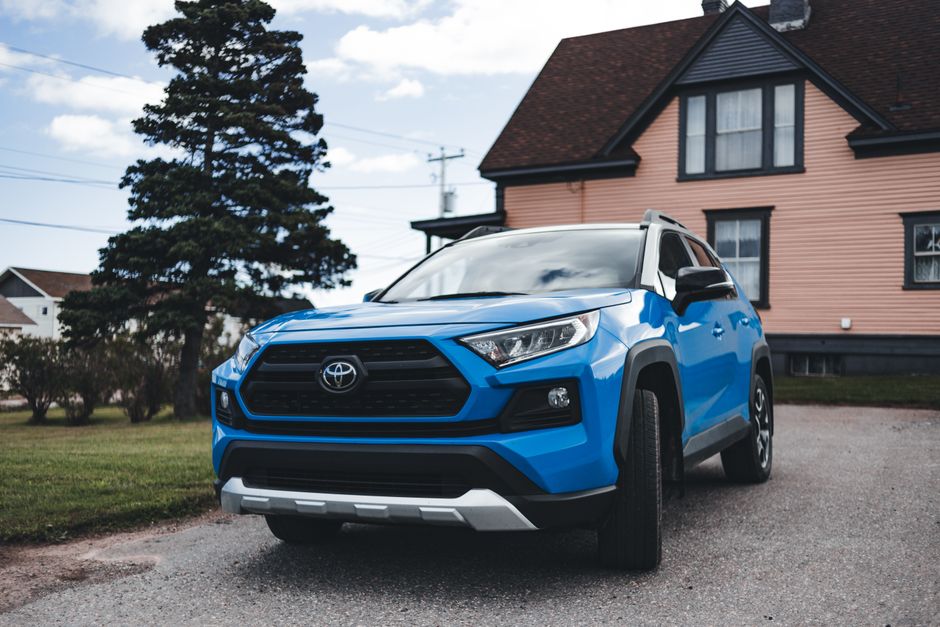
For most budget-minded daily commuters, the $31,900 2026 RAV4 Hybrid LE is the strongest starting point because it pairs the lowest listed MSRP with 47 city/40 highway mpg. Choose the XLE Premium only when its comfort and parking features solve daily needs, choose Woodland for its standard AWD and towing equipment, and choose the plug-in hybrid only when regular charging makes its electric range useful.
The useful distinction is not basic versus loaded. Useful cost is the equipment you will use repeatedly. Avoidable cost is equipment that looks attractive on a listing but does not change your routine. That distinction matters especially here because Toyota has moved the 2026 RAV4 to an electrified-only lineup: there is no conventional gasoline-only choice.
When will 2026 Toyota RAV4 models be available at dealers?
Hybrid models were expected to begin arriving at U.S. dealers in December 2025, while Plug-in Hybrid models were expected in spring 2026, according to the Toyota USA Newsroom. Availability at one specific dealership is a separate question, so do not treat a broad launch date as confirmation that a particular trim is present.
Build a three-step availability check before traveling to a dealer. First, identify the exact trim and powertrain that fit your budget. Second, ask the dealer to confirm that the vehicle is physically on the lot. Third, request the full out-the-door price in writing. The Federal Trade Commission recommends precisely that sequence because advertised prices can leave out fees and add-ons.
This is also the point to separate an actual vehicle from an allocation, an incoming vehicle, or a general promise to locate one. Public material in this research dossier does not publish dealer allocation rules, deposit policies, or a nationwide ordering process for the 2026 RAV4. Ask each retailer to state those terms in writing rather than assuming them.
Which 2026 RAV4 trim has the best value for a daily commuter?
The 2026 RAV4 Hybrid LE has the best value for a daily commuter because it is the lowest-priced listed model at $31,900 MSRP and Toyota lists it at an estimated 47 city/40 highway mpg. It also includes a 12.3-inch digital gauge cluster, a 10.5-inch multimedia display, and Toyota Safety Sense 4.0, so the entry price is not a bare-bones starting point.
Move up only when a particular feature has a clear job in your week. The Hybrid XLE Premium starts at $36,100 and keeps the listed 47 city/40 highway rating. Its height-adjustable power liftgate, heated SofTex-trimmed front seats, and front/rear parking assist with automatic braking create a coherent package for drivers who load cargo often, face cold mornings, or routinely park in close quarters.
The higher trims solve more specialized problems. The $39,900 Woodland has standard AWD, all-terrain tires, roof rails with crossbars, integrated LED fog lights, a tow-hitch receiver, and a 3,500-pound towing capacity, but its listed rating is 41 city/35 highway mpg. The XSE starts at $41,300 and the Limited at $43,300; both list 43 city/37 highway mpg. The Limited adds a panoramic glass roof, nine-speaker JBL audio, and dual wireless chargers.
For a family, the XLE Premium is the practical upgrade when the liftgate, heated seats, and parking assistance will be used frequently. For a snow-belt driver or a road-tripper carrying outdoor equipment, Woodland makes the clearest equipment case. For a commuter focused on total recurring costs, start with the LE and use the same discipline described in How Do I Choose a First Commuter Car by Total Ownership Cost?: compare the complete purchase price and the recurring operating fit, not the monthly payment alone.
| Option | Who it suits | Listed starting MSRP | Key limitation |
|---|---|---|---|
| Hybrid LE | Daily commuters prioritizing the lowest listed entry price and fuel economy | $31,900 | Specific feature differences beyond the published standard equipment are not published in this comparison |
| Hybrid XLE Premium | Drivers who value a power liftgate, heated front seats, and parking assist | $36,100 | $4,200 more than Hybrid LE |
| Hybrid Woodland | Drivers needing standard AWD, all-terrain tires, crossbars, or towing equipment | $39,900 | 41 city/35 highway mpg, below the LE's listed 47 city/40 highway mpg |
| Plug-in Hybrid SE | Drivers with dependable charging who can use electric driving range | $41,500 | $9,600 more than Hybrid LE |
Prices, fuel-economy estimates, and equipment in this table come from Toyota's 2026 RAV4 page and Toyota's 2026 RAV4 Plug-in Hybrid page. They are MSRP figures, not a promise of a dealer's final transaction price.
Should I choose a RAV4 hybrid, plug-in hybrid, or gasoline model?
Choose the Hybrid if you want efficient driving without relying on charging, choose the Plug-in Hybrid if you can charge regularly and can use its electric range, and remove the gasoline-only option from the decision because Toyota does not offer one for 2026. Toyota describes the lineup as 100% electrified, with a choice of Hybrid or Plug-in Hybrid.
The Hybrid is the lower-cost route into the lineup. Toyota lists Hybrid fuel-economy ratings from 38 to 43 mpg combined depending on grade and drivetrain; the LE's listed city/highway estimate is 47/40 mpg. Hybrid FWD models have 226 horsepower and Hybrid AWD models have 236 horsepower, according to Toyota's newsroom.
The Plug-in Hybrid changes the routine, not only the power figure. The PHEV SE starts at $41,500, produces 324 net combined horsepower, has standard AWD, and Toyota lists an EPA-estimated 54-mile all-electric range with 40 mpg/101 MPGe combined. Toyota's earlier newsroom announcement described up to 52 miles of manufacturer-estimated electric range, so shoppers should use the current EPA estimate on Toyota's model page when comparing the SE.
The purchase premium needs a charging plan. The U.S. Department of Energy and EPA's FuelEconomy.gov says a plug-in hybrid can cost roughly $4,000 to $8,000 more than a comparable non-plug-in hybrid and that the payback depends on the share of miles driven electrically, energy prices, and how long the vehicle is kept. In Toyota's published RAV4 pricing, the PHEV SE is $9,600 above the Hybrid LE, although those are not like-for-like trims.
Use a two-question test. Can you charge where the vehicle is normally parked, and will the vehicle's typical trips fit within the available electric range often enough to matter? FuelEconomy.gov notes that 120-volt charging can take several hours, while a 240-volt charger generally takes about one to four hours; without regular charging, a PHEV can still run on gasoline but will not deliver its maximum range or fuel economy.
Frequently Asked Questions
What options are worth paying for on a 2026 RAV4?
Pay for features that remove a repeated inconvenience or support the driving you actually do. The XLE Premium's power liftgate, heated SofTex-trimmed front seats, and parking assist can be worthwhile for frequent cargo loading, cold weather, or tight parking; the Woodland's all-terrain tires, crossbars, and tow-hitch receiver fit drivers who will use them. Toyota has not published a source in this dossier that establishes resale values for individual options.
How do I find a 2026 RAV4 for sale without paying a dealer markup?
Ask each dealer to confirm that a specific vehicle is on the lot and send a written out-the-door price before you visit. The Federal Trade Commission says that figure should include all charges and fees, which makes market adjustments and add-ons visible for comparison. Compare the final documents against that written quote and be prepared to walk away if they do not match.
Is it better to order a 2026 RAV4 or buy one from dealer inventory?
Buy from inventory when a dealer can identify the vehicle and provide a complete written out-the-door price that meets your needs. Public sources in this dossier do not publish Toyota's 2026 RAV4 ordering process, dealer allocation rules, or deposit terms, so those details must be confirmed with each dealer. An order is only worth considering after obtaining its written price and terms in advance.
The decision framework is therefore compact: select the Hybrid LE as the financial baseline, add equipment only to solve a recurring need, choose Plug-in Hybrid only with reliable charging, and obtain written out-the-door quotes before visiting. It does not eliminate the work of shopping, but it keeps the work focused on facts that change the cost and the daily experience.