
2026 Ford Everest: Choose the Right Trim and Diesel Engine
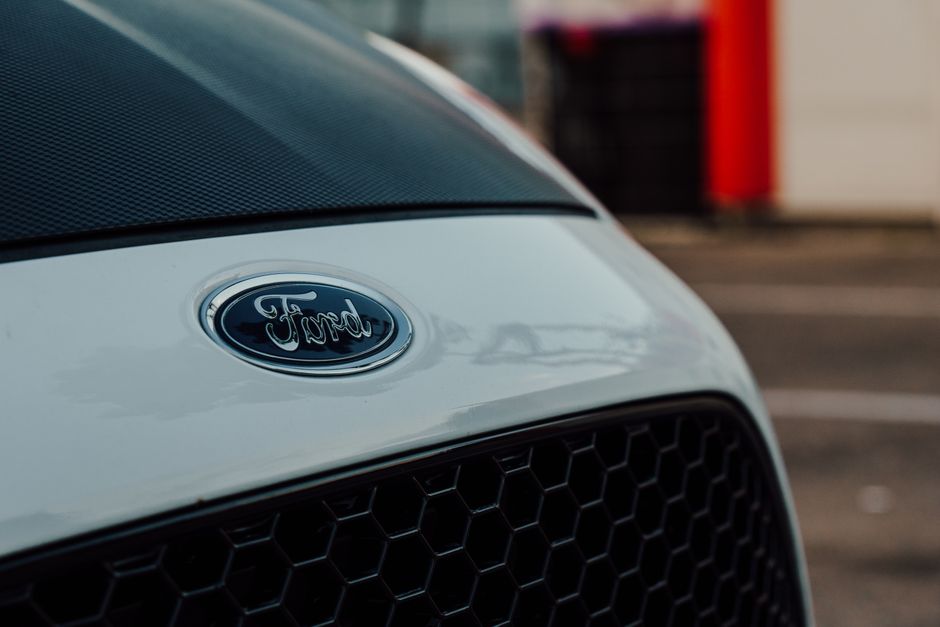
Choose the Active 2.0 if purchase price matters most, the Sport for a better-equipped seven-seat family SUV, the Tremor V6 for regular off-road use, and the Platinum V6 for comfort-led touring. The revised 2.0 diesel now has a timing chain, but its 125kW/405Nm output trails the V6's 184kW/600Nm, making the V6 the clearer fit for frequent heavy towing.
What changed on the 2026 Ford Everest?
The central change is a new entry-level Active grade and a revised four-cylinder diesel, while the former Ambiente and Trend grades cease production. According to the Ford Australia Media Center, the Active replaces those grades and starts at a published manufacturer list price of $58,990 before on-road costs with the 2.0 diesel.
Price is one decision. Capability is another. Treat the line-up as four use cases: Active is the cost-controlled starting point, Sport is the family-equipment step, Tremor is the specialised off-road choice, and Platinum is the luxury-focused V6 flagship. Wildtrak is named in the broader buyer question, but the provided published sources do not state its 2026 Everest price, equipment, seating, or drivetrain. Those details should be confirmed with Ford rather than assumed from another Everest variant.
| Option | Who it suits | Published price before on-road costs | Key limitation or trade-off |
|---|---|---|---|
| Active 2.0 | Buyers prioritising the lowest published entry price | $58,990 | Five seats are standard; seven seats are optional |
| Active V6 | Buyers wanting V6 torque at the lowest published V6 price | $66,990 | Claimed fuel use is 8.5L/100km, versus 7.1L/100km for the 2.0 |
| Sport 2.0 | Families wanting standard seven seats and added equipment | $68,990 | Its 2.0 diesel has less power and torque than the V6 |
| Sport V6 | Families who tow often or travel long distances | $76,990 | Claimed fuel use is 8.5L/100km |
| Tremor V6 | Drivers who regularly use rough tracks | $79,990 | Claimed fuel use is 9.3L/100km |
| Wildtrak | Not published in the supplied sources | Not published | Not published |
| Platinum V6 | Touring buyers who value standard luxury features | $83,490 | Highest published list price |
The Active is not stripped back. Ford lists 18-inch all-season alloy wheels, leather-accented seats, a 12-inch SYNC 4A screen, wireless Apple CarPlay and Android Auto, wireless charging, and nine airbags. It is five-seat standard, with a third row available. The Sport builds on that position with standard seven seats, 20-inch wheels, a powered tailgate, heated and ventilated front seats, a 360-degree camera, and a 400W inverter, according to CarExpert.
The Tremor's purpose is more narrowly defined: 17-inch General Grabber all-terrain tyres, Bilstein position-sensitive dampers, Rock Crawl mode, and heavy-duty side steps. Platinum takes the other direction, with seven seats as standard, heated outboard second-row seats, heated and ventilated front seats, Matrix LED headlamps, a panoramic roof, and a 400W Pro Power Onboard inverter. The system is straightforward: pay for equipment you will repeatedly use, not equipment that only improves a specification sheet.
Does the 2026 Ford Everest 2.0 diesel have a timing chain?
Yes. The updated 2026 Everest 2.0L turbo-diesel uses a timing chain rather than the wet timing belt fitted to the outgoing arrangement.
A timing belt and a timing chain perform the same broad engine-timing task, but they are different designs. A wet timing belt is a toothed rubber belt that operates in oil; a timing chain is a conventional chain design. Chasing Cars reports that Ford has also added new injectors, while Ford says the changes are intended to improve durability.
There is an important trade-off hidden behind the timing-chain headline. The outgoing 2.0L bi-turbo was rated at 154kW and 500Nm, while the revised single-turbo engine is rated at 125kW and 405Nm. According to Ford, peak 2.0 torque arrives from 1,750rpm, and the engine is paired with a 10-speed automatic. That makes the 2.0 a relevant option for buyers who prioritise initial cost and claimed 7.1L/100km fuel use, but not an equivalent performance substitute for the old bi-turbo.
Before signing, use a three-point confirmation process: ask which engine is on the order form, ask the dealer to identify the exact timing-system maintenance requirements for your market, and include the engine choice in the full ownership-cost comparison. If tyres or wheels are being changed for touring, the same total-cost discipline applies to comparing tyres and rims before agreeing to finance.
Should I get the Ford Everest 2.0 diesel or 3.0 V6?
Get the 2.0 diesel when lower purchase price and lower published fuel consumption are the priorities; get the 3.0 V6 when frequent towing, longer loaded trips, or full-time 4WD matter more than the extra upfront and fuel cost.
The numbers define the choice. Ford rates the 2.0 at 125kW and 405Nm, while the V6 produces 184kW and 600Nm. Both engines are paired with a 10-speed automatic, and published sources state a maximum braked towing capacity of 3,500kg for the Everest range. Yet maximum rating is not the whole decision: the V6 has 195Nm more torque, so it is the more credible match for regular heavy loads and long-distance towing.
- Choose the 2.0 for cost control. Active 2.0 is the least expensive published option, and CarExpert lists its claimed consumption at 7.1L/100km. It is also available in Sport if standard seven seats and the Sport equipment package matter more than V6 output.
- Choose the V6 for recurring load. The V6 is available across the range, including Active for the first time, and uses full-time 4WD in Active. Ford specifically positions it for buyers needing more towing and long-distance performance.
- Choose the trim after choosing the job. A V6 does not make a Tremor necessary for a sealed-road school run, and a Platinum does not make a Sport inadequate for family trips. Match the drivetrain to load and terrain, then match the trim to seating and equipment needs.
Fuel use is the cost check. Published claimed V6 consumption is 8.5L/100km in Active, Sport, and Platinum, rising to 9.3L/100km in Tremor; both engines use an 80L tank. Actual costs will depend on fuel price, distance, load, road conditions, and driving style, none of which are covered by the supplied public figures. Confirm your local on-road price, option pricing, service terms, and availability before treating a list price as your final budget.
The practical endpoint is clear: buy the Active 2.0 when it solves the job without forcing unnecessary expenditure. Move to the V6 when towing or loaded touring is routine. Then select Sport, Tremor, or Platinum only where their equipment solves a repeated use case.
Frequently Asked Questions
Is the Everest Active good value compared with the Sport?
Yes, if you want the lowest published entry price and can live without the Sport's extra equipment. The Active 2.0 is listed at $58,990 before on-road costs, versus $68,990 for the Sport 2.0. Sport adds seven seats, 20-inch wheels, a powered tailgate, heated and ventilated front seats, a 360-degree camera, and a 400W inverter.
Is the Ford Everest Tremor worth waiting for?
The Tremor is worth considering when rough tracks are a recurring part of ownership, not an occasional holiday detour. Its published equipment includes 17-inch General Grabber all-terrain tyres, Bilstein position-sensitive dampers, Rock Crawl mode, and heavy-duty side steps. At $79,990 before on-road costs, it costs more than the Sport V6, so buyers who mostly use sealed roads should decide whether that specialised hardware will be used.
Which 2026 Everest trim is best for towing and family trips?
For a family that tows often, the V6-powered Sport is the most balanced published choice because it combines seven seats and family-focused equipment with 184kW and 600Nm. The Platinum V6 suits buyers who also place a high value on standard luxury equipment, while the Active V6 is the lower-priced route to the same V6 output. Ford rates the Everest range to tow up to 3,500kg braked, but buyers should confirm the relevant market specification and the weight of their complete tow setup.