
Does the 2026 Toyota Corolla Cross Fit Your Family and Budget?
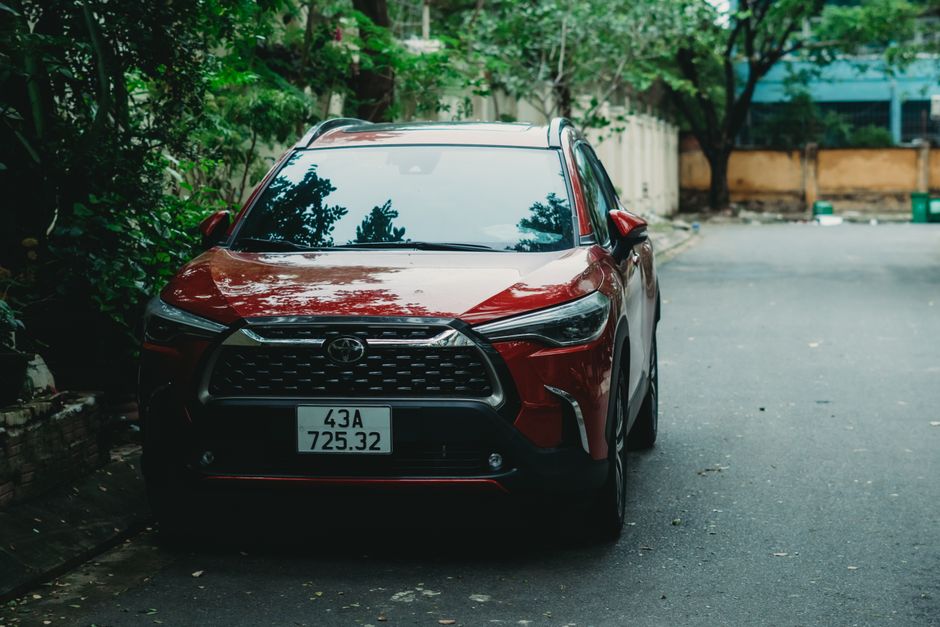
The 2026 Toyota Corolla Cross fits a small family that values low purchase cost, strong fuel economy, and modest cargo capacity, but its tight rear legroom and narrow rear-door opening make it a poor match for frequent large child-seat use or long trips with four adults. The Hybrid is the stronger value when its extra power, standard AWD, and 42-mpg combined rating fit the budget.
Here is what shoppers often get wrong: a crossover badge does not guarantee crossover-sized family space. Toyota gives the gas Corolla Cross a $25,335 starting price, while the Hybrid starts at $29,795, according to Toyota. That makes the Corolla Cross a budget-conscious option, not a substitute for a larger vehicle if your weekly routine involves bulky strollers, rear-facing seats, and adult passengers in back.
Is the new Toyota Corolla Cross big enough for a family of four?
It is big enough for a family of four with younger children and light-to-moderate gear, but it is not roomy enough to ignore the rear-seat test. J.D. Power reports that the rear seat has roughly 6 to 8 inches less legroom than rivals it names, including the Chevrolet Trax, Honda HR-V, Hyundai Kona, and Kia Niro. That is not a minor specification-sheet difference when a rear-facing seat needs room behind the front passenger.
Edmunds reaches the same practical conclusion: the Corolla Cross has among the tightest rear legroom in its class, and its narrow lower rear-door opening makes installing a large child seat harder than in other SUVs. The car can still work when children are small and the front occupants can move their seats forward. But do not buy it on the assumption that a crossover automatically makes loading children easy.
Rear-seat vents are standard on the gas L and the base Hybrid S, which is a useful family feature at this price. Every version also has 60/40-split rear seats and a 1,500-pound towing limit, per Toyota. Those features increase flexibility, but they do not create more rear legroom.
Use this decision rule: bring the car seat, put the tallest regular front passenger in place, install the seat, and then open and close the rear door yourself. If that process already feels like a daily annoyance in the dealership lot, it will become one at school pickup. Small compromises are cheap only until they happen twice a day.
How much cargo space does the Corolla Cross have with child seats installed?
With child seats installed, expect the rear seats to remain upright, leaving about 24 to 25 cubic feet in the gas Corolla Cross and 21.5 to 22 cubic feet in the Hybrid; no source here publishes a stroller-specific measurement. J.D. Power lists 24 cubic feet for the standard model and 21.5 cubic feet for the Hybrid, while Edmunds reports roughly 25 cubic feet for the regular model and 21.5 for the Hybrid.
That distinction matters. A child seat usually prevents folding the corresponding rear-seat section, so shoppers should judge the cargo bay in its normal, seats-up condition rather than the optimistic folded-seat total. Car and Driver reports 22 cubic feet behind the Hybrid's second row and fit seven carry-on suitcases there in its test. That gives a useful reference point for luggage, but it is not a promise that a particular double stroller or wagon will fit.
Here is how to avoid the rookie mistake: take the actual stroller, diaper bag, grocery tote, and travel bags to the test drive. Load them with the rear seats up, then repeat with the child seat installed. Public data does not cover every stroller shape, so a real fit test beats an internet argument every time.
| Option | Who it suits | Cost | Key limitation |
|---|---|---|---|
| Corolla Cross gas L | Budget-focused small family needing basic everyday utility | $25,335 starting price | Gas efficiency is rated at 31 city/33 highway mpg; blind-spot monitoring is not listed until LE |
| Corolla Cross gas LE | Gas buyer who wants blind-spot monitoring and rear cross-traffic alert | $27,665 starting price | Rear-seat space remains tight relative to named rivals |
| Corolla Cross Hybrid S | Buyer prioritizing standard AWD, stronger acceleration, and city efficiency | $29,795 starting price | Blind-spot and rear cross-traffic warnings are not included |
| Corolla Cross Hybrid SE | Hybrid buyer who wants added driver-assistance convenience features | $31,115 starting price | Hybrid cargo space is reported at 21.5 cubic feet |
| Toyota RAV4 | Buyer who needs to compare a larger Toyota before deciding | not published in the provided sources | Direct rear-seat and cargo comparison not published in the provided sources |
The listed prices above come from Toyota's 2026 model page. Toyota's newsroom announcement uses lower figures before its stated $1,495 dealer processing and handling fee, so compare quotes using the same fee treatment rather than treating either number as an out-the-door price.
Is the Corolla Cross Hybrid worth the extra cost?
Yes, the Corolla Cross Hybrid is worth the extra cost for drivers who value city fuel economy, standard AWD, and quicker performance; it is less compelling for shoppers whose priority is maximum cargo room or the lowest purchase price. Toyota rates the Hybrid at 46 city, 39 highway, and 42 combined mpg, versus 31 city and 33 highway mpg for the gas model. The larger city advantage is the point: frequent stop-and-go errands are where the Hybrid's extra purchase cost has the clearest practical case.
The performance difference is meaningful, not decorative. Toyota says the Hybrid combines a 2.0-liter engine with three electric motors for 196 net combined horsepower and includes electronic on-demand AWD. The gas model has 169 horsepower. Edmunds measured 0-60 mph in 7.8 seconds for the Hybrid versus 9.4 seconds for the gas model, while Consumer Reports measured 7.7 seconds and found a 13-mpg overall improvement over the regular Corolla Cross.
Highway-only drivers should keep expectations grounded. Car and Driver recorded 36 mpg for the Hybrid at 75 mph and 30 mpg for the nonhybrid on its test route. That is still an advantage, but it is smaller than the city-rating gap. The Hybrid is not a magic money machine; its strongest case is a mixed or city-heavy schedule plus a real need for AWD.
Consumer Reports describes the Hybrid premium as roughly $2,000 over the conventional model in the configuration it evaluated, including AWD, and calls it worthwhile for the added power and fuel economy. Toyota's published starting-price gap between the base gas L and Hybrid S is $4,460, but those are not like-for-like trims and the Hybrid includes standard AWD. Compare equipped vehicles, not headline prices, before calling either deal expensive.
Do not let fuel economy distract from basic ownership costs. If your annual mileage is low, an insurance approach designed for low-mileage drivers may deserve the same careful comparison as the powertrain. Savings come from matching the vehicle and its recurring costs to your actual routine, not from buying the most complicated option on the lot.
Who should choose another compact SUV instead?
Choose another vehicle if a large child seat, frequent adult rear passengers, or a full-size family travel load is non-negotiable. Edmunds specifically flags the Corolla Cross's narrow lower door opening and rear-legroom handicap for large child-seat installation. J.D. Power identifies the rear-seat shortfall versus several subcompact rivals. That is enough evidence to put rear-seat access ahead of touchscreen size on your shopping checklist.
Choose the gas Corolla Cross when the lower entry price matters most, AWD is not essential, and the family load is modest. Choose the Hybrid SE or higher when you want the Hybrid's standard AWD and want blind-spot monitoring, rear cross-traffic alert, wireless charging, and rear USB-C ports. Toyota says the larger 10.5-inch display and 12.3-inch gauge cluster are reserved for XLE and Hybrid XSE, while Car and Driver lists faux-leather upholstery, heated front seats, a sunroof, ambient lighting, and a rear center armrest among XSE additions.
The blunt conclusion: do not stretch to the upper Corolla Cross trims to solve a space problem. Those upgrades improve equipment, but they do not add rear legroom or enlarge the Hybrid's cargo bay. Test the practical fit first; then choose the least expensive trim that carries the safety and convenience features your household will actually use.
Frequently Asked Questions
Should I buy a Corolla Cross or spend more on a RAV4?
Buy the Corolla Cross when a lower starting price, a smaller footprint, and modest family cargo needs are the priority. Spend more on a RAV4 only after comparing current local pricing and test-fitting the people and gear you carry; the sources used here do not publish a direct 2026 RAV4 price, cargo, or rear-seat comparison. Do not assume the smaller Toyota solves a space problem it does not solve.
Is the Corolla Cross comfortable for long highway trips?
It can handle highway trips, but it is not the strongest choice for frequent long-distance family travel. J.D. Power says the Hybrid makes highway passing less stressful, while Consumer Reports found the driver's seat loses support on longer drives and says lumbar adjustment requires the Hybrid XSE. Car and Driver's highway test also shows the Hybrid retained an efficiency advantage over the nonhybrid.
What features are missing from lower Corolla Cross trims?
The base gas L includes an 8-inch touchscreen, six speakers, LED projector headlights, automatic high beams, and rear-seat vents, but blind-spot monitoring with rear cross-traffic alert begins on the LE. Toyota reserves the 12.3-inch gauge cluster and 10.5-inch touchscreen for the XLE and Hybrid XSE. On the Hybrid, Consumer Reports says the base S lacks blind-spot and rear cross-traffic warnings, while Toyota says the SE adds those items, wireless charging, and rear USB-C ports.