
How Can I Build a Healthy Breakfast That Actually Keeps Me Full?
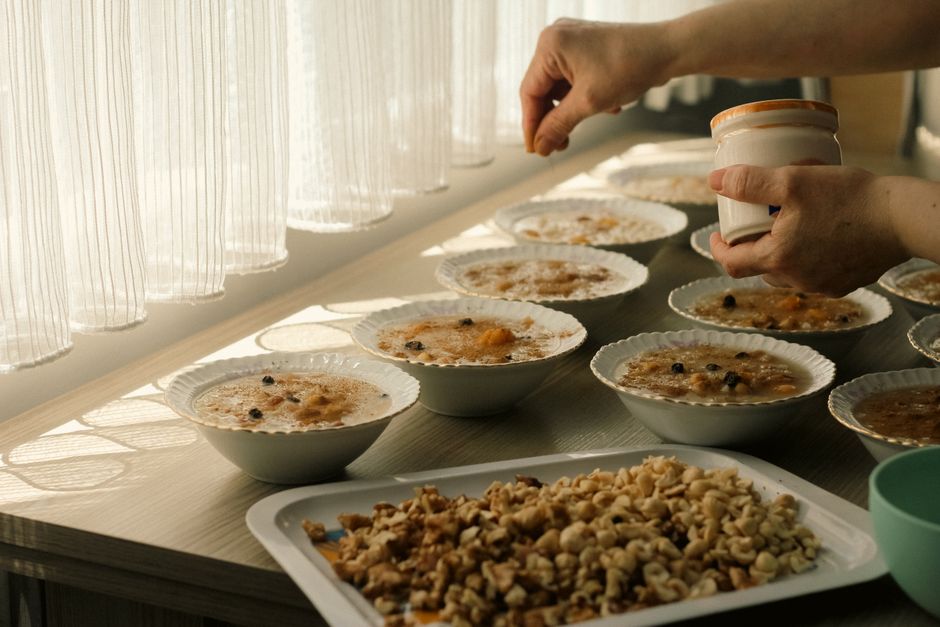
Build a satisfying healthy breakfast by pairing a meaningful protein source with a fiber-rich food, then add flavor and a format you can repeat on busy mornings. Use the Nutrition Facts label to compare fiber, protein, and added sugars; choose a no-cook, make-ahead, or quick-cook option based on the time you truly have.
What makes a breakfast healthy and filling?
A healthy, filling breakfast is one that combines protein and fiber in a format you will realistically eat, while keeping an eye on added sugars, saturated fat, and sodium. Protein is the anchor. Fiber is the supporting structure. Flavor and preparation time determine whether the plan survives a weekday morning.
This is not a search for a single approved breakfast. It is a three-part assembly system: choose a protein base, choose a fiber source, then choose a flavor direction. The system matters because it lets the same ingredients work as overnight oats, a warm bowl, toast, or a wrap.
The U.S. Food and Drug Administration sets the Daily Value for protein at 50 g and dietary fiber at 28 g, based on a 2,000-calorie diet. Those figures are not personal targets for every reader; they are useful label-reading reference points. The FDA's practical rule is that 5% Daily Value or less is low and 20% Daily Value or more is high.
| Breakfast component | What it does in the system | Source-backed examples |
|---|---|---|
| Protein base | Gives the meal a substantial core | Greek yogurt, milk, egg whites |
| Fiber source | Adds bulk and helps build a more substantial plate | Oats, black beans, avocado, fruit, whole-wheat tortilla |
| Flavor and texture | Makes the repeatable choice appealing | Allspice, fruit, almonds, salsa, hot sauce |
A randomized crossover trial of 48 healthy adults, published on PubMed, compared a 30 g protein egg breakfast, a breakfast with 20 g protein plus 7 g fiber, and a 10 g protein cereal breakfast. Both egg-based breakfasts reduced post-meal glycemic response and food intake at the following meal compared with the lower-protein, lower-fiber cereal breakfast. The useful lesson is not that cereal is forbidden. It is that building around protein and fiber changes the structure of the meal.
How can I add more protein to breakfast without protein powder?
You can add more protein without powder by making dairy, eggs, or legumes the base of the meal and pairing that base with a familiar fiber food. The goal is not to make breakfast complicated. The goal is to stop treating protein as an afterthought added after the bowl or plate is already built.
Use one of these formats, selected by the time available:
- No-cook: Combine old-fashioned oats, milk, Greek yogurt, and allspice the night before. Add fruit and sliced almonds before eating.
- Make-ahead savory: Prepare egg-white, black bean, avocado, and whole-wheat tortilla burritos, then reheat one when needed.
- Fast assembly: Build a bowl or toast around a protein food, then add a legume or avocado for fiber and a savory topping for contrast.
The USDA MyPlate overnight-oatmeal recipe provides 19 g protein and 7 g dietary fiber per serving. It also lists 0 g added sugars, although it contains 23 g total sugars from dairy and fruit ingredients. That distinction matters: the FDA says sugars naturally present in milk, fruits, and vegetables do not count as added sugars.
For a savory route, the American Heart Association recipe delivers 12 g protein and 10 g fiber per serving using egg whites, no-salt-added black beans, avocado, and a whole-wheat tortilla. Its active preparation time is 5 minutes, with 10 minutes of cooking, and the burritos can be made the night before and reheated for 2 to 3 minutes. If advance preparation is your constraint, see What Freezer Breakfasts Keep Their Texture and Reheat Well? for a related planning approach.
Research should also be read carefully. A 2023 randomized crossover study in the Journal of Dairy Science found that a dairy-based high-protein breakfast increased satiety, fullness, and satisfaction over the following 3 hours among 30 women aged 18 to 30 with overweight or obesity, compared with a lower-protein breakfast and breakfast omission. It did not significantly reduce total daily energy intake. Fullness is a useful outcome, but it is not a promise about what every person will eat later that day.
How can I add more protein to breakfast without protein powder?
You can add more protein without powder by making dairy, eggs, or legumes the base of the meal and pairing that base with a familiar fiber food. The goal is not to make breakfast complicated. The goal is to stop treating protein as an afterthought added after the bowl or plate is already built.
How are healthy breakfast ideas different if I do not like sweet foods?
Healthy breakfasts do not need to be sweet; a savory template built around eggs or legumes, whole grains, and avocado can provide protein, fiber, and strong flavor without relying on sweetened foods. This is often the more durable option for people who do not want fruit-forward bowls or cereal first thing in the morning.
Start with the burrito model: egg whites for protein, black beans for fiber, avocado for a creamy element, and salsa or hot sauce for flavor. The American Heart Association recipe shows that this format can provide 12 g protein, 10 g fiber, 2 g sugars, 2 g saturated fat, and 218 mg sodium per serving. That level of detail is useful because “savory” alone does not tell you how a meal fits your priorities.
Legumes make savory breakfasts more flexible than many people assume. According to the Dietary Guidelines for Americans, one-half cup of cooked lentils provides 7.8 g of fiber, black beans provide 7.5 g, chickpeas provide 6.3 g, and edamame provides 4.1 g. One-half cup of avocado provides 5.0 g of fiber. Use those foods as building blocks for a bowl, wrap, or toast rather than treating breakfast as a separate category with separate rules.
Added sugar is another label-reading problem, not a moral test. The FDA recommends keeping added sugars below 10% of total daily calories, equal to 50 g on a 2,000-calorie diet, and notes that consuming too much added sugar can make it harder to meet nutrient needs while staying within calorie limits. Compare products using the Added Sugars line, and favor lower-added-sugar choices when the labels otherwise solve the same breakfast problem.
The practical next step is to choose one sweet option and one savory option for the week, then buy ingredients that overlap where possible. Oats, yogurt, fruit, beans, tortillas, avocado, and eggs are not interchangeable in taste. They are interchangeable at the system level: each lets you construct a breakfast with protein, fiber, flavor, and a preparation plan.
Frequently Asked Questions
Which breakfast foods have both protein and fiber?
The source-backed combinations in this guide include overnight oats made with oats, milk, Greek yogurt, fruit, and almonds, plus an egg-white, black bean, avocado, and whole-wheat tortilla burrito. USDA MyPlate's overnight oats recipe provides 19 g protein and 7 g fiber per serving, while the American Heart Association burrito provides 12 g protein and 10 g fiber. Combining a protein food with beans, oats, fruit, or whole grains is a practical way to build both nutrients into one meal.
How can I make overnight oats taste better without too much sugar?
Use fruit, allspice, and sliced almonds for flavor, then check the Added Sugars line rather than relying on total sugars alone. MyPlate's tropical overnight oatmeal uses fruit and dairy but lists 0 g added sugars per serving. The FDA explains that sugars naturally present in milk, fruits, and vegetables are not counted as added sugars.
What are healthy breakfast options besides eggs?
Overnight oats with milk, Greek yogurt, fruit, and almonds are one evidence-informed option, providing 19 g protein and 7 g fiber in the USDA MyPlate recipe. Savory alternatives can also center beans, lentils, chickpeas, edamame, avocado, or high-fiber unsweetened bran cereal, depending on the meal format you prefer. The Dietary Guidelines for Americans lists substantial fiber amounts for each of those plant foods.
Sources
- U.S. Food and Drug Administration: Daily Value on Nutrition and Supplement Facts Labels
- U.S. Food and Drug Administration: Added Sugars on the Nutrition Facts Label
- Dietary Guidelines for Americans: Food Sources of Fiber
- PubMed: Randomized Controlled Crossover Trial of Protein and Fiber at Breakfast
- Journal of Dairy Science: High-Protein Breakfast Crossover Study
- USDA MyPlate: Tropical Overnight Oatmeal
- American Heart Association: Egg, Avocado, and Black Bean Breakfast Burrito