What Freezer Breakfasts Keep Their Texture and Reheat Well?
Breakfast burritos, pancakes, waffles, and baked egg dishes are dependable freezer breakfasts when cooled promptly, sealed with little air, and reheated until hot. Skip wet or fragile fillings such as lettuce, mayonnaise, cream sauce, and hard-cooked eggs. For best quality, use most cooked breakfast leftovers within 3 to 4 months, while baked egg dishes have a shorter 2-to-3-month quality window.
The useful distinction is not frozen versus fresh. A good freezer breakfast is built for reheating; a poor one is built around ingredients that release water or lose their structure. That distinction turns meal prep from a collection of disappointing packets into a reliable weekday system.
Which breakfast foods freeze and reheat without getting soggy?
The most reliable choices are breakfast burritos, pancakes, waffles, and baked egg dishes because their cooked structure can tolerate freezing and reheating. Utah State University Extension specifically recommends freezing pancakes or waffles and reheating them in a toaster, while its breakfast burrito recipe combines cooked sausage, potatoes, vegetables, scrambled eggs, cheese, and flour tortillas.
Texture is the constraint. The University of Minnesota Extension explains that freezing expands water and ruptures plant cell walls, which makes thawed raw fruit and vegetables softer. That change is less noticeable when the ingredient will be cooked after freezing. In practical terms, cook vegetables before putting them in a burrito or egg bake, rather than expecting a raw, watery filling to emerge unchanged.
| Breakfast format | Why it holds up | Best reheating approach | Quality window from the sources |
|---|---|---|---|
| Breakfast burrito | Cooked fillings are enclosed in a flour tortilla. | Microwave until warmed through; finish in a dry oven, toaster oven, or air fryer if a firmer exterior matters. | Up to 3 months in Utah State University Extension's recipe. |
| Pancakes or waffles | The cooked batter structure is already set. | Toaster. | USDA's 3-to-4-month cooked-leftover quality guidance is a practical general limit. |
| Egg muffins or other baked egg dishes | Baking sets the egg mixture before freezing. | Microwave, oven, toaster oven, or air fryer until 165°F. | 2 to 3 months for baked egg casseroles and quiche. |
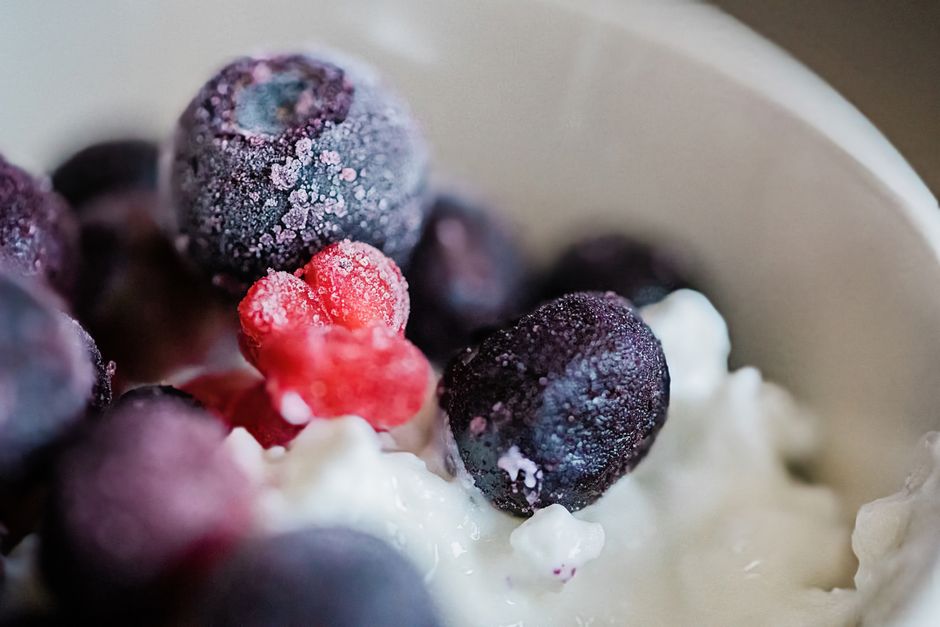
| Smoothie packs | Softening is not a drawback when fruit will be blended. | Blend from frozen as your recipe allows. | Frozen fruits and vegetables: generally 8 to 12 months for quality. |
Use a two-part reheating rule. Microwave heat is fast. Dry heat restores surface texture. A microwave is the practical first step for a frozen burrito or egg dish; a toaster suits waffles and pancakes. An oven, toaster oven, or air fryer can be a useful finish for foods whose outer surface matters, provided the center reaches 165°F.
A one-hour batch-prep system
- Cook stable components first. Prepare scrambled eggs, cooked sausage, cooked potatoes, and partially cooked vegetables for savory options. Bake an egg dish, pancakes, or waffles for a sweet-and-savory mix.
- Cool before packing. The USDA Food Safety and Inspection Service says perishable cooked food should be refrigerated or frozen within 2 hours, or within 1 hour when temperatures exceed 90°F. Divide food into shallow containers or use an ice or cold-water bath to cool it rapidly.
- Package by breakfast. Wrap individual portions, remove excess air, and put them in airtight freezer-safe packaging. Label each package with its preparation date and the food inside.
- Freeze with a plan for use. Put burritos on a parchment-lined baking sheet first, then transfer them to a freezer bag after they are frozen, following Utah State University Extension's method. Keep waffles and pancakes in portions that can go directly to the toaster.
Can I freeze breakfast burritos with eggs?
Yes, you can freeze breakfast burritos with cooked scrambled eggs, provided the burritos are cooled and frozen promptly and reheated thoroughly. Utah State University Extension's published recipe uses scrambled eggs, turkey sausage, potatoes, vegetables, cheese, and flour tortillas; it freezes the finished burritos for up to 3 months and advises microwaving them for about 2 minutes or until warmed through.
Build the burrito around cooked, relatively dry ingredients. Cooked potatoes and vegetables belong in the filling because cooking makes their later softening less disruptive. Avoid ingredients that are meant to be crisp or creamy after assembly. The USDA Food Safety and Inspection Service names mayonnaise, cream sauce, and lettuce as foods that do not freeze well.
For a budget-minded routine, make the burrito the savory anchor and reserve toaster-ready waffles or pancakes for the sweet option. That reduces the number of cooking methods needed on a rushed morning. If fruit is part of breakfast, serving it separately can also preserve the texture of the main meal; this site's guide to the best fruit to eat in the morning can help with that choice.
How long do egg muffins last in the freezer?
Egg muffins are best treated as baked egg dishes and used within 2 to 3 months for quality. FoodSafety.gov lists baked egg casseroles and quiche at 2 to 3 months in a 0°F freezer, which is the closest practical federal storage range for a portioned egg muffin.
Safety and quality are different clocks. FoodSafety.gov states that freezer storage guidelines are for quality, and USDA says food stored continuously at 0°F remains safe indefinitely. The quality window is still the useful household rule because it gives you a workable rotation: label the date, use the older batch before making another, and do not mistake a long-safe freezer life for an unlimited texture guarantee.
Egg preparation also has two temperature endpoints. The University of Minnesota Extension advises cooking eggs and egg dishes to 160°F, then reheating prepared egg dishes to 165°F. A microwave is convenient for a single egg muffin, while an oven, toaster oven, or air fryer may better suit several portions or a drier exterior. Hard-cooked eggs are not a substitute here: FoodSafety.gov says they do not freeze well.
What should I not put in a freezer breakfast sandwich?
Do not put lettuce, mayonnaise, cream sauce, hard-cooked eggs, or mayonnaise-based salads in a freezer breakfast sandwich. USDA identifies lettuce, mayonnaise, and cream sauce as poor freezing candidates, and FoodSafety.gov says hard-cooked eggs and egg, chicken, ham, tuna, and macaroni salads do not freeze well.
The better sandwich architecture is a sturdy bread, a cooked egg component, cheese, and a cooked meat or vegetable filling that will be reheated. This is not about making every ingredient identical after freezing. It is about choosing ingredients whose change is either small or expected.
Packaging is the other half of the system. Freezer burn is air contacting food, according to USDA, and it creates dry, grayish-brown, leathery areas without making food unsafe. Wrap sandwiches tightly, remove excess air from the final bag or container, and keep packages sealed. The University of Minnesota Extension's rule is direct: remove all air and seal airtight.
Frequently Asked Questions
Should I thaw freezer breakfast meals before reheating?
No. The USDA says frozen leftovers can be reheated without thawing. If you choose to thaw, use the refrigerator, cold water, or microwave, and reheat leftovers to 165°F.
How do I prevent freezer burn on breakfast meal prep?
Remove as much air as possible and use airtight freezer-safe packaging. USDA identifies freezer burn as a quality problem caused by air contacting food, while the University of Minnesota Extension recommends airtight bags, tight-lidded containers, suitable glass containers, or vacuum packaging.
Can I freeze overnight oats or smoothie packs?
The provided sources support smoothie-oriented frozen fruit: the University of Minnesota Extension identifies fruit puree as suitable for fruit that will be added to smoothies. The sources do not provide specific guidance on freezing overnight oats, so public guidance in this research set does not establish a texture or storage recommendation for them.
The next step is concrete: choose two formats, pack individual portions with minimal air, write the date on each package, and reheat egg-based meals to 165°F. A freezer breakfast succeeds when the packaging, storage window, and reheating method are planned together.
Sources
- USDA Food Safety and Inspection Service: Freezing and Food Safety
- USDA Food Safety and Inspection Service: Leftovers and Food Safety
- FoodSafety.gov: Cold Food Storage Charts
- Utah State University Extension: Quick School Breakfast
- University of Minnesota Extension: Freezing Food
- University of Minnesota Extension: Eggs