Is a Suzuki Jimny Worth It? Buy for Trails, Not Highway Comfort
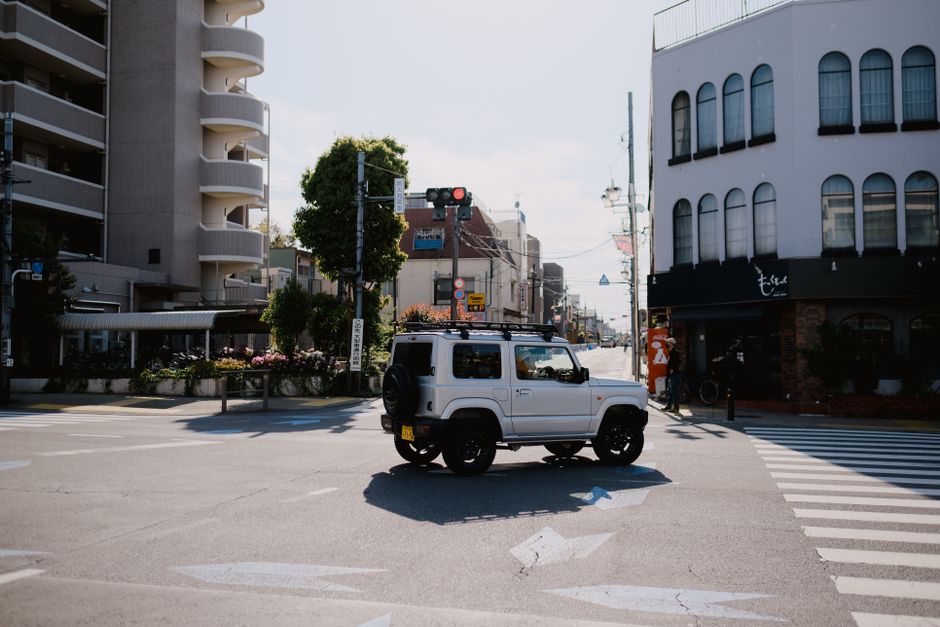
A Suzuki Jimny can be worth its purchase price as a trail vehicle or compact second car, particularly if low-range 4WD and a small footprint solve a real need. It is a weaker value as a primary highway commuter or family vehicle: its four seats, 85-litre rear cargo area, wind sensitivity and limited highway reserve demand a deliberate compromise.
The useful question is not whether the Jimny is cheap in isolation. Value is fit between the vehicle's constraints and the jobs it must perform. Trail traction is one job. Daily comfort, passenger room and relaxed highway travel are different jobs. Treating those as one decision is how an appealing purchase becomes an expensive mismatch.
Why do used Suzuki Jimny prices remain so high?
Public data supplied for this assessment do not publish used-Jimny transaction prices, price trends or dealer mark-ups, so they cannot prove how high any particular listing should be. What the specifications do establish is why a buyer may assign value to the Jimny's unusual combination of compact dimensions and off-road equipment.
According to Suzuki Australia, the three-door Jimny is 3,650 mm long, has 210 mm of ground clearance, a 36-degree approach angle, a 47-degree departure angle and part-time 4WD. RACV adds the hardware behind those figures: a ladder-frame chassis, rigid axles, long-travel three-link suspension and dual-range 4WD. For a trail-focused owner, that is not decorative specification-sheet material. It is the reason to consider the car at all.
Value is capability retained. Cost is capability paid for but rarely used. A buyer whose regular trips involve narrow tracks, steep transitions or low-speed off-road driving may reasonably prioritize this package. A buyer whose routine is school runs, airport trips and long motorway distances is paying for strengths that may remain dormant.
A four-part purchase filter
- Name the primary job. Choose trail vehicle, city commuter, second car or family transport before comparing listings.
- Price the operating baseline. Suzuki lists official combined consumption of 6.4 L/100 km for the manual and 6.9 L/100 km for the four-speed automatic; both have 40-litre tanks.
- Price the uncertainty. Ask for insurance and servicing quotes for the specific vehicle before committing. The provided sources do not publish a standard insurance premium or servicing bill.
- Preserve an exit plan. Inspect condition, documentation and import status carefully, because those factors determine whether the vehicle can be registered and used, not merely admired.
| Option | Who it suits | Published cost or consumption | Key limitation |
|---|---|---|---|
| Three-door Jimny manual | Buyer prioritizing the Jimny's compact off-road package | 6.4 L/100 km official combined consumption | Purchase price not published; three-door cargo space is 85 litres with rear seats raised |
| Three-door Jimny automatic | Buyer who prefers a four-speed automatic | 6.9 L/100 km official combined consumption; the 2019 GLX automatic has an estimated A$1,913 annual fuel cost under the Green Vehicle Guide assumptions | Purchase price not published; highway performance is described by RACV as adequate at best |
| Used local Jimny | Buyer seeking a simpler registration path | Purchase price, insurance and servicing cost not published | Condition and history must be assessed vehicle by vehicle |
| Imported Jimny | Buyer able to verify approval and compliance before import | Shipping, storage, fees, taxes, duty, quarantine, modifications, registration and insurance may apply; total cost not published | Import approval is required before importation, and registration remains subject to state or territory requirements |
Is a Jimny comfortable enough to use as a daily driver?
A Jimny is comfortable enough for a daily driver only when short, low-load trips matter more than passenger space, luggage capacity and quiet long-distance travel. That can work well for a solo driver or couple using it around town, but it is a narrow definition of daily practicality.
The three-door model seats four, yet Suzuki specifies only 85 litres of cargo capacity with the rear seatbacks in place. Folding them raises the figure to 377 litres, which solves one storage problem by removing the rear-seat solution. RACV's road test also found rear legroom tight even for two children and described the luggage area as holding little more than a small overnight bag.
That leads to a practical rule: decide whether people or cargo are the non-negotiable load. A couple who normally travel light may accept the compromise. A family that needs rear access, child space and routine luggage capacity should not assume that four seats equal family-car usefulness.
Fuel economy needs the same discipline. The Australian Government Green Vehicle Guide lists the 2019 Jimny GLX automatic at 8.2 L/100 km urban, 6.1 L/100 km extra-urban and 6.9 L/100 km combined. It estimates A$1,913 in annual fuel cost using 14,000 km and average retail fuel prices from its last reported quarter. These are comparison inputs, not a personal budget guarantee: the guide says on-road consumption depends on operating circumstances, and Suzuki makes the same caution about laboratory figures.
Before purchase, run a normal weekday test drive rather than a short loop. Bring the passengers and the items the car must carry. Include the road speed, parking situation and route that create the most friction in your week. Also obtain an insurance quote before buying; for a useful framework, see Should I Keep Comprehensive Insurance on a Paid-Off Car?.
Is the Jimny safe and stable on the highway?
The Jimny has useful standard active and passive safety equipment in the ANCAP-rated three-door range, but it is not the most settled choice for frequent highway work. Its light, boxy form and off-road-oriented design create a stability trade-off that a buyer should experience on an open-road test drive.
ANCAP reports scores of 73% for adult occupant protection, 84% for child occupant protection, 52% for vulnerable-road-user protection and 50% for safety assist for three-door variants sold from January 2019 through December 2024. The rated vehicles had dual frontal, side chest and side head-protecting curtain airbags, plus autonomous emergency braking and lane-departure warning. ANCAP also notes that lane-keep assist, blind-spot monitoring and speed-sign recognition were unavailable, and the 2018-datestamp rating expired in December 2024. A rating expiry is not a statement about an individual vehicle's condition; it is a reason to verify equipment on the exact model year being considered.
Stability is a separate question from feature availability. RACV found noticeable body roll in corners and wrote that crosswinds push the lightweight, boxy Jimny around noticeably on the highway. Its test also found limited reserve for hills and overtaking, with frequent manual gear changes needed to maintain pace. Those observations make highway suitability route-dependent: occasional open-road use is different from repeated long-distance, windy or heavily loaded travel.
Use this road-test checklist
- Test at the speeds you actually use. Check steering correction, wind response and noise on an open road where legal and safe.
- Test an incline and merging situation. Assess whether the available performance feels adequate with the expected number of occupants.
- Test the load plan. Raise and fold the rear seats, then check whether passengers, cargo or both fit your routine.
- Check the paperwork before paying. For an import, confirm approval, compliance evidence and registration eligibility. The Department of Infrastructure says the process can include shipping, storage, taxes, duty, quarantine, modifications, registration and insurance.
For imported examples, this is not administrative trivia. The department warns that importing a road vehicle without approval is an offence and that the Australian Border Force will not release a vehicle from Customs control without an import approval. A lower advertised purchase figure is therefore not a total-cost figure.
The decision can be reduced to a usable rule. Buy the Jimny when its off-road geometry, dual-range 4WD and compact footprint will be used often enough to outweigh its space and highway compromises. For a mostly motorway-based household, compare it against a more settled daily vehicle and keep the Jimny idea as a second-car decision instead.
Frequently Asked Questions
Does the Jimny have enough rear-seat and cargo space for a family?
For most families, the three-door Jimny is a constrained fit rather than a flexible family car. It seats four, has 85 litres of cargo space with the rear seats up, and RACV reports tight rear legroom even for two children. Folding the rear seats increases cargo volume to 377 litres, but removes the rear seating capacity.
What fuel economy do Jimny owners get in city and highway driving?
The provided sources do not publish owner-reported city and highway fuel economy. For the 2019 Jimny GLX automatic, the Australian Government Green Vehicle Guide lists laboratory figures of 8.2 L/100 km urban, 6.1 L/100 km extra-urban and 6.9 L/100 km combined. Suzuki cautions that NEDC figures may not mimic real-life driving conditions.
Should I buy a used local Jimny or an imported one?
A used local Jimny is usually the lower-complexity route because an import must have appropriate approval before arrival and still meet state or territory registration requirements. An imported vehicle may suit a buyer who has confirmed eligibility and total landed costs, but the government lists shipping, taxes, duty, quarantine, compliance work, registration and insurance among the possible expenses.
Sources
- Suzuki Australia: Jimny Specifications
- ANCAP: Suzuki Jimny Safety Rating
- Australian Government Green Vehicle Guide: 2019 Suzuki Jimny GLX Automatic
- RACV RoyalAuto: Suzuki Jimny 2019 Review
- Department of Infrastructure: 8 Steps to Importing a Vehicle
- Department of Infrastructure: Importing a Road Vehicle into Australia