
Should I Go to Diesel Mechanic School or Start as a Lube Technician?
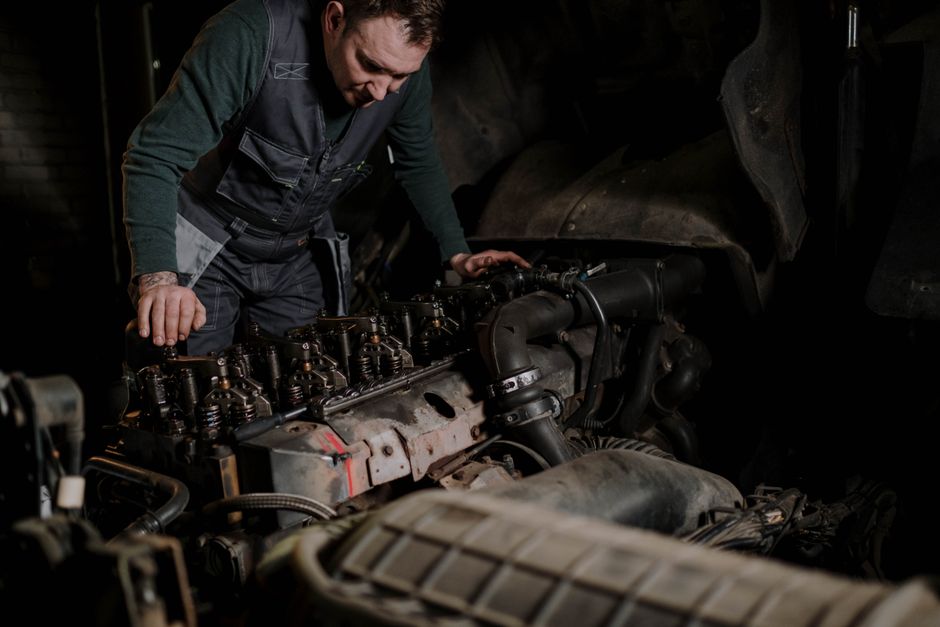
You do not need diesel mechanic school to enter the field: the Bureau of Labor Statistics says a high school diploma and long-term on-the-job training are the typical starting point. But postsecondary training can make you more competitive, and the lowest-cost route is not automatically the fastest route to diagnostic work. Choose based on your cash position, local employers, and the credentials you need next.
The common belief is that an expensive program is the only serious way into diesel work. The truth is more useful: there are several legitimate entry points, and each trades upfront cost against structure, paid experience, and access to a particular employer. Do not borrow for a vague promise. Build a route that gets you working and makes the next credential easier to earn.
Do I need diesel mechanic school or can I start as a lube technician?
You can start in an entry-level maintenance or lube-oriented role without diesel school, then progress through paid hands-on work. BLS says trainees without postsecondary education commonly begin by cleaning parts, checking fuel and oil levels, and moving vehicles before taking on more complex repairs. That is not a dead end; it is the documented starting layer of the occupation.
School changes the sequence, not the basic need for experience. A structured program gives you classroom and shop time before your first employer assigns responsibility, while a paid entry role gives you work experience immediately. Employers may prefer applicants who completed postsecondary diesel-repair training, according to BLS, so the faster paycheck route can come with a slower path to proving diagnostic readiness.
Here is how to make the decision without pretending every option costs the same.
| Path | Published time or instruction | Published cost or funding detail | Best use |
|---|---|---|---|
| Paid entry-level work | Long-term on-the-job training is typical | No tuition figure is published by BLS | Build paid experience through preventive-maintenance tasks |
| Community-college certificate | One-year example; 36 credits at Portland Community College | $6,782.60 estimated, excluding the required tool set | Add structured training before applying |
| ASE-accredited IMMR program | At least 540 combined classroom and lab/shop hours | Costs vary; public standards do not set tuition | Verify a baseline curriculum for entry-level training |
| Manufacturer program | DTNA Finish First and Peterbilt Technician Institute each advertise 12 weeks | DTNA says its scholarship pays nearly half of tuition; many hiring dealers offer reimbursement and tool incentives | Target a dealer network and a named truck product line |
Portland Community College's estimate is especially useful because it refuses the tuition-only fantasy. Its one-year Diesel Service Technology certificate estimate includes tuition, fees, lab charges, textbooks, required courses, parking, and other costs, but excludes the required tool set. Price the full route, including tools and the income you will not earn while in class.
For a first-year roadmap, begin by mastering inspection and preventive-maintenance work. Then ask for supervised exposure to electrical checks, brake and chassis work, and diagnostic procedures. After that, pick a direction: dealer product training for heavy trucks, or fleet, equipment, and agricultural employers where the day-to-day vehicle mix fits the openings near you. BLS projects about 26,500 diesel technician openings per year on average from 2024 to 2034, largely from replacement needs, so an entry job is a real opening, not a consolation prize.
Is a community-college diesel certificate enough to get hired?
Yes, a community-college diesel certificate can be enough to support an entry-level application, but it does not replace the need to learn on the job. BLS says employers may prefer postsecondary diesel-repair training while also identifying on-the-job learning as typical. Read that combination correctly: the certificate can help you get through the door; work performance carries you forward.
Do not judge a certificate by its name alone. Compare its instructional hours, shop access, curriculum, tool requirements, commute, and whether nearby employers recruit from it. Portland Community College lists a one-year estimated total of $6,782.60 excluding the tool set, while its published two-year certificate estimate is $15,883.80 and its associate-degree estimate is $16,202.20, also excluding the tool set. More school is not automatically a better bargain if the additional time does not line up with the job you are pursuing.
Manufacturer training can be a sharper fit when you already know the dealer network you want. DTNA Finish First is a 12-week hands-on program at UTI campuses in Arizona, Illinois, and Florida for maintaining, diagnosing, and repairing DTNA products. Graduates earn certifications related to Freightliner and Western Star trucks and Detroit engines. That specificity is valuable when it leads to a dealer job; it is less useful as a substitute for learning how to work across every possible fleet.
Peterbilt's 12-week Technician Institute similarly focuses on PACCAR information and diagnostic systems, electrical systems and diagnostics, PACCAR MX engines, chassis systems, and preventive maintenance. Its dealer-sponsored school partnership is designed to pair local-school training with dealer employment opportunities. Ask the dealer which program it recognizes, what role follows graduation, and whether training reimbursement is written down. Verbal enthusiasm does not pay a tuition bill.
Does attending an ASE-accredited program matter to diesel employers?
Attending an ASE-accredited program matters because it gives you a verifiable curriculum standard, but the available sources do not say every diesel employer requires it. That distinction matters. Accreditation is evidence of program design, not a guaranteed job offer.
The ASE Education Foundation recognizes three medium/heavy truck program levels: Inspection, Maintenance, and Minor Repair; Truck Service Technology; and Master Truck Service Technology. Their minimum combined classroom and lab/shop instruction rises from 540 hours to 740 hours to 1,040 hours. Accredited programs must also cover defined shares of Priority 1, 2, and 3 tasks, and the accreditation lasts five years.
That structure is worth paying attention to because it answers a practical question before enrollment: what will you actually practice? The foundation says theory instruction and hands-on performance of basic tasks are intended to provide initial training for entry-level employment or prepare students for further training. Check the program's current accreditation status and level, then compare it to the job duties in local postings. Do not pay for a master-level label if an entry-level maintenance role is the immediate goal.
ASE technician certification is a separate decision. According to ASE, the Medium-Heavy Truck T Series covers eight systems, including diesel engines, drive train, brakes, electrical/electronic systems, HVAC, and preventive maintenance inspection. Passing T2 through T8 earns Master Medium-Heavy Truck Technician recognition; T1 is not required for that designation. Certification must be renewed every five years, so treat it as a career-maintenance cost and plan, not a one-time finish line.
Build a route that preserves cash and momentum
The best route is the one with a clear next employer, a manageable cost, and documented hands-on learning. BLS reported median annual pay of $60,640, or $29.15 per hour, for diesel service technicians and mechanics in May 2024. That figure describes the occupation, not an entry-level guarantee, so do not use it to justify debt without checking the actual job and training terms available to you.
- List nearby diesel employers and separate dealers, fleets, equipment operations, and agricultural machinery employers by the work they advertise.
- Apply for entry-level work while comparing certificate and manufacturer programs against a specific hiring path.
- Keep records of training and hands-on duties from day one, because ASE certification depends on both a passing test and documented relevant experience.
- After gaining the basics, pursue the credential that matches the systems and products you work on most often.
Start with the work that gets you experience, then spend education dollars where they remove a real barrier. That is how you avoid paying for impressive-sounding training that does not move your career forward.
Frequently Asked Questions
How much work experience do I need before taking ASE diesel tests?
ASE's 2025 Medium/Heavy Truck study guide says certification in this series requires successful completion of the test and two years of relevant work experience. Appropriate vocational training can count toward that requirement, reducing the employment experience needed. The practical move is to document work duties and training as you go rather than trying to reconstruct them later.
Will a truck dealer pay for manufacturer training and certifications?
Public information does not establish that every truck dealer will pay. DTNA says many hiring dealers offer tuition reimbursement and tool incentives, while its Finish First scholarship pays nearly half of tuition. Ask a prospective dealer for its current written reimbursement and tool policy before treating either benefit as part of your compensation.
What skills should I learn before applying for an entry-level diesel technician job?
Start with preventive-maintenance habits, safe and accurate fluid-level checks, parts handling, vehicle movement, and basic electrical and diagnostic-system familiarity. BLS identifies cleaning parts, checking fuel and oil levels, and moving vehicles as common trainee tasks; Peterbilt's curriculum also emphasizes preventive maintenance, electrical diagnostics, chassis systems, and PACCAR diagnostic systems. A home garage can help with basic maintenance habits, but use a structured safety plan such as this guide to setting up a home garage for basic car maintenance.
Sources
- U.S. Bureau of Labor Statistics
- National Institute for Automotive Service Excellence: Medium-Heavy Truck Tests
- ASE 2025 Medium/Heavy Truck Study Guide
- ASE Education Foundation: Truck Program Standards
- Portland Community College: Diesel Service Costs
- Daimler Truck North America: Finish First
- Peterbilt Technician Institute