
How Can I Plan Party Appetizers for Vegetarian, Gluten-Free, and Dairy-Free Guests?
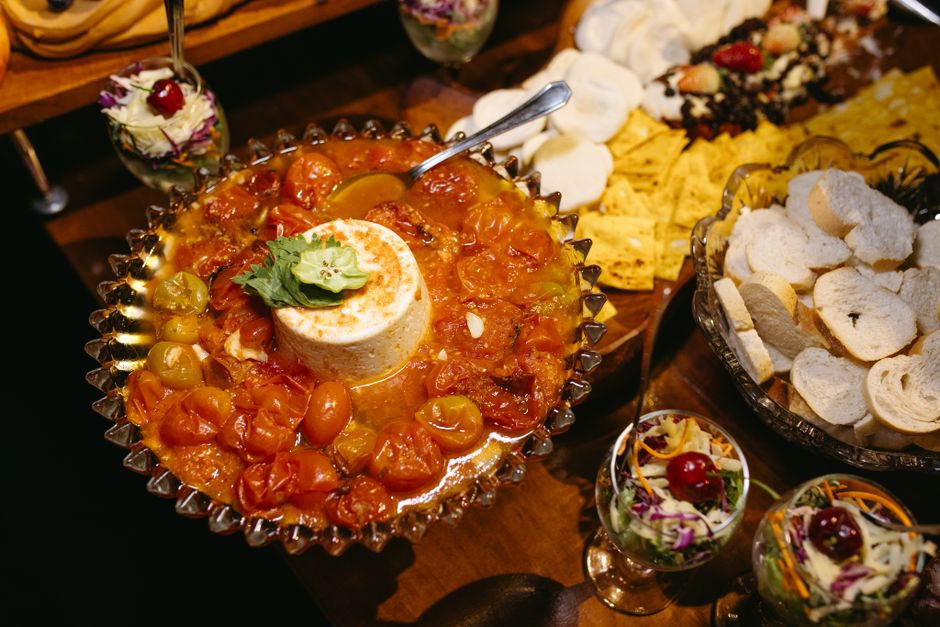
Plan one shared appetizer spread around naturally gluten-free produce, substantial bean, lentil, or soy-based dishes, and clearly separated optional toppings. Use packaged foods labeled gluten-free where cross-contact is a concern, identify milk and other major allergens on labels, give every dish its own utensil, and keep cold foods at 40 F or below and hot foods at 140 F or above.
The useful distinction is between a shared base and separate additions. The shared base is food every invited guest can assess and serve safely. Separate additions are the items that introduce restrictions, such as dairy-containing toppings or meat. Designing this way reduces duplicate dishes without pretending that a buffet is risk-free.
What appetizers can I serve when guests have different dietary restrictions?
Serve a mix-and-match board built from produce, clearly identified gluten-free packaged foods, and filling plant-based dishes, with restricted ingredients kept as separate additions. Fresh fruits and vegetables are naturally gluten-free, according to the U.S. Food and Drug Administration, making them a practical starting point rather than a last-minute substitute.
Start with three components that can stand on their own: a tray of fresh vegetables and fruit, a bean or lentil dip, and a warm potato or vegetable bite. Then place any optional cheese, meat, or creamy topping in its own bowl with its own utensil. The menu becomes modular: guests choose additions rather than having to identify and avoid them within every dish.
There is a budget benefit to this structure. Buying one base ingredient for multiple uses is easier to manage than producing several near-identical recipes with different substitutions. For a larger gathering or a catered component, the same principle applies when you compare food truck catering quotes without surprise costs: ask what is included, what is separately served, and how dietary requests are handled before ordering.
| Menu role | Shared option | Separate addition | What to label |
|---|---|---|---|
| Cold platter | Fresh vegetables and fruit | Cheese or meat platter | Milk, if present, and serving instructions |
| Filling anchor | Bean, lentil, or soy-based dip or bite | Dairy-containing sauce | Ingredient and allergen information |
| Crunch | Packaged gluten-free crackers or chips | Wheat-based crackers | Gluten-free status and wheat |
| Warm dish | Roasted potato or vegetable appetizer | Cheese or meat topping | Milk and any other major allergens |
Labels are not decoration. The FDA identifies nine major food allergens in the United States: milk, eggs, fish, Crustacean shellfish, tree nuts, peanuts, wheat, soybeans, and sesame. Packaged foods containing a major allergen must identify its source on the label, so retain packaging or write down the ingredient information before guests arrive. This matters especially for dips and toppings, where sesame, soy, or milk may be easy to overlook.
What are easy gluten-free appetizers that do not taste gluten-free?
The easiest gluten-free appetizers are foods that begin without gluten, such as fresh produce and potato or vegetable dishes, paired with packaged items specifically labeled gluten-free when needed. The goal is not to make a wheat-based appetizer imitate itself; it is to serve food that works as food first.
A useful rule is this: naturally gluten-free is an ingredient description, while gluten-free is also a label claim with a defined standard. The FDA says a packaged food labeled gluten-free must contain less than 20 parts per million of gluten and cannot contain wheat, rye, barley, triticale, or an unprocessed ingredient derived from those grains. That makes the label particularly useful for crackers, chips, grains, legumes, seeds, sauces, and seasonings, where growing, transport, storage, or manufacturing can introduce gluten cross-contact.
- Choose a naturally gluten-free centerpiece. Use vegetables, fruit, potatoes, or a bean-based dip as the main appetizer rather than relying on a replacement bread product.
- Check every packaged companion. Read labels for crackers, chips, sauces, seasoning blends, and prepared dips. A product without an obvious wheat ingredient is not automatically an appropriate gluten-free choice for every guest.
- Protect the serving area. Put gluten-containing crackers and bread in a separate zone rather than beside the shared dip. A guest should not have to guess whether a serving spoon was used in both places.
Cross-contact is the operational problem. Food Allergy Research & Education explains that allergen proteins can transfer in amounts too small to see, and cooking does not remove that risk. Use thoroughly washed utensils and pans, prepare the safer foods first, keep them covered, and prevent splatter from other dishes. Wiping crumbs from a knife or board is not enough; FARE recommends hot, soapy water to remove allergen proteins.
For a self-serve table, give each item a dedicated spoon, tong, or spreader. If a gluten-containing cracker lands in a shared dip, treat that dish as no longer reliably separate and replace it from a backup container. This is not fussy hosting. It is a clear system that lets guests make informed choices.
Which vegetarian appetizers are filling enough for a party?
Vegetarian appetizers feel substantial when beans, lentils, or soy-based foods form the center of the plate rather than appearing as a small side option. These ingredients can support a shared spread for vegetarians, dairy-free guests, and guests who also eat meat, while separate additions preserve choice.
A 2024 systematic review in The Journal of Nutrition examined 13 observational studies across the United States, Europe, and South Korea. In the vegan diets reviewed, beans, peas, and lentils contributed a median 19.6 percent of plant protein, while soy products contributed 17.3 percent. The practical implication is modest but useful: a party spread anchored by bean dip, lentil dishes, or soy-based bites has more staying power than a table made only of raw vegetables and crackers.
Build the spread in layers. Offer a bean or lentil dip with vegetables and labeled gluten-free crackers. Add a warm roasted vegetable or potato dish for contrast. Then place cheese, meat, or dairy-based sauce in clearly separate bowls for guests who want them. The plant-based core remains useful to everyone, rather than becoming a small consolation plate at the end of the table.
Before serving, run a four-part check: ingredients, utensils, labels, and temperature. Ingredients tell you what belongs in the dish. Utensils prevent accidental transfer. Labels allow guests to decide for themselves. Temperature keeps perishable food out of the conditions where bacteria multiply rapidly.
The USDA Food Safety and Inspection Service says bacteria grow most rapidly between 40 F and 140 F and can double in as little as 20 minutes. Keep cold appetizers at or below 40 F, including by serving them on ice, and hold hot appetizers at or above 140 F. Perishable foods should not sit unrefrigerated for more than two hours, or more than one hour when the temperature is above 90 F.
Frequently Asked Questions
What dairy-free party food can I make ahead?
Cold vegetable trays, fruit, and bean- or lentil-based dips can be prepared ahead when their ingredients fit the guests' needs. Refrigerate perishable make-ahead foods in shallow containers at 40 F or below within two hours, according to USDA FSIS. Keep labels and separate serving utensils ready until it is time to serve.
How do I label appetizers to avoid allergen mix-ups?
Give every item a clear, accurate label that identifies gluten status and relevant major allergens, and assign a separate utensil to each dish. FARE identifies buffet spills, shared utensils, and misplaced labels as cross-contact risks. Group allergen-containing components away from the shared safe foods and keep backup containers available if a dish is compromised.
Can I make one appetizer spread for vegans and meat eaters?
Yes. Make the central spread plant-based with substantial bean, lentil, or soy components, then place meat-based additions separately with their own utensils. This lets guests build a plate from the shared foods while reducing the need to duplicate every appetizer.
The final step is concrete: write labels before cooking, prepare the shared foods first with clean equipment, and put separate additions at the far end of the table. A menu is inclusive when its system is understandable, not when it asks guests to take a chance.
Sources
- U.S. Food and Drug Administration: Questions and Answers on the Gluten-Free Food Labeling Final Rule
- U.S. Food and Drug Administration: Food Allergies
- Food Allergy Research & Education: Avoiding Cross-Contact
- Food Allergy Research & Education: Buffet Guidance
- USDA Food Safety and Inspection Service: The Danger Zone
- The Journal of Nutrition: Protein Sources Across Plant-Based Dietary Patterns