
Store-Bought Snacks That Fit Your Budget, Goals, and Commute
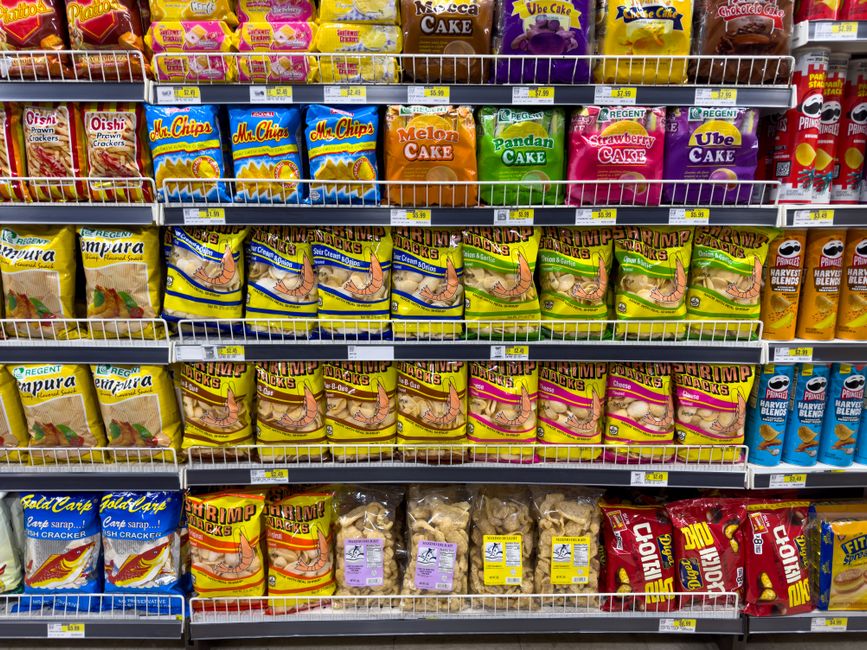
Buy packaged snacks by matching the setting to the label: choose protein- and fiber-containing options when you need more staying power, use the Nutrition Facts panel to compare servings and added sugars, and reserve non-perishable choices such as jerky, crackers, popcorn, pretzels, trail mix, and granola bars for desks, cars, and travel. This system replaces health-halo shopping with a quick, repeatable decision.
A snack plan has two jobs. Satiety is the likelihood that a snack helps bridge the gap until your next meal. Portability is the ability to keep that snack safe where your day actually happens. Those jobs overlap, but they are not the same. A bar may be convenient; a refrigerated item may fit a different dietary goal but needs a cold source.
What snacks should I buy that will actually keep me full?
Start with snacks that combine listed protein grams and dietary fiber, then compare the serving size you plan to eat. No label can promise that one product will satisfy every person, but this is a stronger screen than choosing by calories or package language alone.
Evidence supports the direction, with an important boundary. In a randomized, single-blind crossover study published in PubMed, 23 women ate higher-protein, higher-fiber snack bars or isocaloric high-fat, high-refined-carbohydrate bars. After the morning higher-protein, higher-fiber bar, energy consumed at the following buffet lunch was 5% lower, from 4,901 to 4,657 kJ. That finding does not turn every bar into a meal replacement. It does give shoppers a practical reason to compare protein and fiber before judging a snack by calorie count.
Fiber needs interpretation, not blind faith. A systematic review in PubMed found that viscous fibers, including pectins, beta-glucans, and guar gum, reduced appetite more often than less-viscous fibers. The review also found that the overall effects on energy intake and body weight were relatively small. Fiber grams are a useful signal, not a guarantee.
Use the three-part fullness check
- Read the serving first. Compare products only after checking how much one serving is. The Nutrition Facts numbers describe that serving, not necessarily the whole package.
- Compare protein in grams. The U.S. Food and Drug Administration explains that protein usually has no %DV on the label, so the listed grams are the comparison tool.
- Use fiber %DV as the second signal. FDA defines 5% DV or less as low and 20% DV or more as high. When comparing similar snacks, favor the one with more dietary fiber and then consider whether its added sugars, sodium, or saturated fat undermine the trade-off.
For a high-protein grocery list, put packaged bars with comparable protein grams and fiber %DV on the shortlist, then read the whole panel. For a vegan-oriented list, the same method still applies: public data provided here does not identify specific vegan products, so the label must do the sorting rather than a package claim.
What are the healthiest packaged snacks at the grocery store?
The healthiest packaged snack for your cart is the one that has a label profile aligned with your goal and a serving you can use realistically, not the one with the loudest wellness language. FDA provides a workable comparison rule: choose foods higher in dietary fiber, vitamin D, calcium, iron, and potassium and lower in saturated fat, sodium, and added sugars.
Health halos are shortcuts. “Natural,” “protein,” or a familiar ingredient on the front of a package does not replace the Nutrition Facts label. Use the back panel to create a four-line decision: serving size, protein grams, fiber %DV, and Added Sugars %DV. Then inspect sodium and saturated fat %DV if you are deciding between otherwise similar options.
Added sugars deserve their own line of sight. According to the FDA, total sugars include naturally occurring and added sugars, so Total Sugars alone does not answer a lower-sugar shopping question. The Daily Value for added sugars is 50 grams on a 2,000-calorie diet, and the agency’s low/high guide still applies: 5% DV or less is low, while 20% DV or more is high.
| Option | Who it suits | Cost | Key limitation |
|---|---|---|---|
| Higher-protein, higher-fiber snack bar | Shoppers comparing packaged bars for protein and fiber | not published | Study evidence does not establish that every bar is equally filling |
| Jerky | Travel, desk, or car storage | not published | Compare sodium on the Nutrition Facts label |
| Crackers or popcorn | Travel, desk, or car storage | not published | Compare fiber, sodium, and serving size between packages |
| Pretzels | Travel, desk, or car storage | not published | Compare sodium and serving size between packages |
| Trail mix or granola bars | Travel, desk, or car storage | not published | Use the separate Added Sugars line for lower-sugar comparisons |
The budget method is comparison, not a made-up price threshold. Public sources supplied for this guide do not publish current store prices, package sizes, or product-level dietary claims. Build a short list within the snack type you will actually use, compare labels at the same serving size, and buy the option that best fits the goal you set before entering the aisle. For a more detailed label routine, see Choose Filling Store-Bought Snacks With a 5-Point Label Check.
What cheap snacks can I keep at work or in my car?
For an unrefrigerated desk, car, or travel bag, choose non-perishable snacks and keep perishable foods out of the plan unless you have reliable cold storage. FoodSafety.gov specifically identifies jerky, crackers, popcorn, pretzels, trail mix, and granola bars as snacks that can remain safe without refrigeration.
Safety changes the purchase decision. FoodSafety.gov says bacteria multiply rapidly between 40 degrees F and 140 degrees F. Cold perishable foods must stay at 40 degrees F or below; without a cold source, they should not sit out longer than two hours, or one hour when temperatures exceed 90 degrees F. A hot vehicle is not a cooler, regardless of how brief the errand seems.
Build storage by location
- Desk drawer. Stock non-perishable choices in their unopened packaging and use the label screen before buying multiples.
- Car or travel bag. Use non-perishable options when refrigeration is unavailable. Do not treat cheese, yogurt, deli meats, or cut produce as car-storage snacks without cold control.
- Lunchbox. If you want perishable snacks, pack enough cold sources to keep them at 40 degrees F or below. This is the right place for a chilled choice, not a dashboard.
That distinction also saves money. A snack that becomes unsafe before you eat it is not a bargain. Choose the storage format first, then use the label system to compare the portable options that remain.
Frequently Asked Questions
Which store-bought snacks have protein and fiber?
Look for packaged snack bars that list both protein grams and dietary fiber on the Nutrition Facts label. FDA notes that protein often has no %DV, so compare protein by grams per serving, while fiber can be compared with %DV. A PubMed crossover study of 23 women found that a higher-protein, higher-fiber snack bar reduced energy consumed at the following lunch compared with an isocaloric high-fat, high-refined-carbohydrate bar.
What snacks can I buy instead of chips and candy?
Crackers, popcorn, pretzels, trail mix, granola bars, and jerky are all named by FoodSafety.gov as non-perishable snack choices. They are categories, not automatic nutrition winners: compare serving size, dietary fiber, added sugars, sodium, and saturated fat before choosing between packages. For a lower-added-sugar comparison, use the Added Sugars line rather than Total Sugars alone.
What shelf-stable snacks are good for travel?
FoodSafety.gov identifies jerky, crackers, popcorn, pretzels, trail mix, and granola bars as non-perishable snacks that can remain safe without refrigeration. They are practical for travel, a desk drawer, or a car because they do not require a cold source. Perishable snacks require different handling: keep them at 40 degrees F or below, or discard them after two hours without cold storage, reduced to one hour above 90 degrees F.
The next grocery trip needs one decision before you browse: identify whether the snack is for immediate eating, a chilled lunchbox, or shelf-stable backup. Then apply the same label sequence every time: serving, protein grams, fiber %DV, Added Sugars %DV, and the sodium and saturated-fat comparison. A repeatable system is more useful than a list of products that may not fit your budget, routine, or store.
Sources
- U.S. Food and Drug Administration: The Lows and Highs of Percent Daily Value on the Nutrition Facts Label
- U.S. Food and Drug Administration: Added Sugars on the Nutrition Facts Label
- PubMed: High protein high fibre snack bars reduce food intake and improve short term glucose and insulin profiles compared with high fat snack bars
- PubMed: Effects of dietary fibre on subjective appetite, energy intake and body weight
- FoodSafety.gov: Splash into Food Safety at the Pool this Summer