
Easy Party Snacks to Buy: 7 Picks for Any Crowd
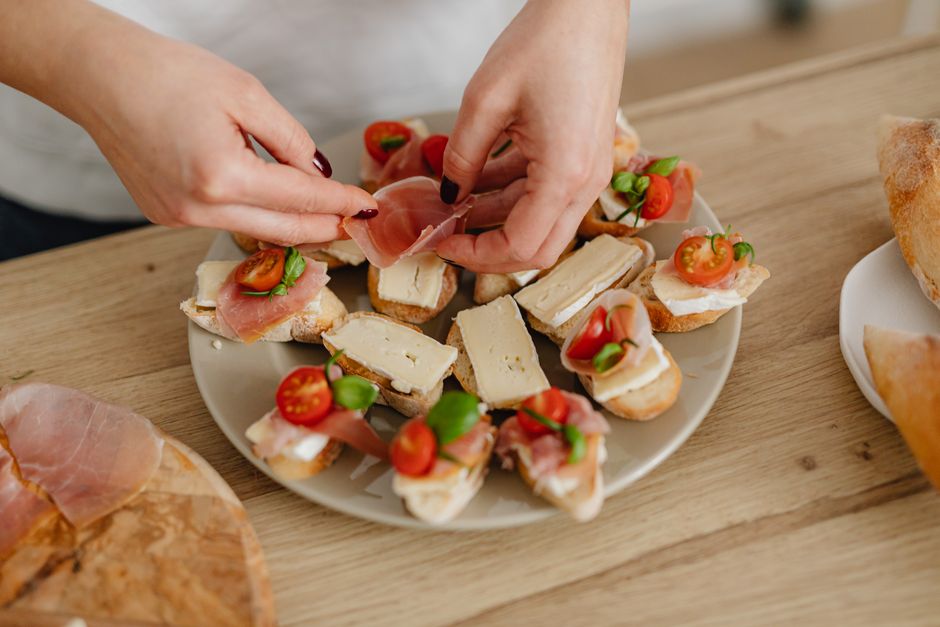
Easy party snacks to buy include vegetable and fruit trays, crackers and cheese, popcorn, cookies, sliders, wings, and a build-your-own pasta or taco spread. Match the mix to your guest count and whether snacks replace a meal, then keep cold foods at 40°F or below and hot foods at 140°F or above. Choose packaged items with clear labels and offer suitable alternatives for dietary needs.
What are some good snacks to buy for a party?
Good party snacks are easy to portion, fit the event’s serving setup, and give guests more than one kind of choice. A useful starting mix is something fresh, something crunchy, a filling option, and a sweet item. Iowa State University Extension and Outreach names fruit and vegetable trays, sliders, taco bars, chicken wings, baked beans, cookies, cupcakes, and donuts as crowd-friendly choices.
Use this numbered list of seven options to build a spread without requiring every item to be homemade:
- Vegetable tray: A ready-to-serve cold option. Include a dip only if its label and storage needs suit your guests and serving setup.
- Fruit tray or whole fruit: A fresh choice that can balance richer snacks. Whole fruits are also among the USDA’s listed exceptions to the room-temperature discard rule for perishable foods.
- Crackers and cheese: Crackers are ready to serve; cheese needs appropriate cold holding. Keep cold foods at 40°F or below.
- Popcorn: A nonperishable-style base for a snack bowl or themed spread. WWNO/NPR describes popcorn as an inexpensive base for a themed snack bar.
- Cookies, cupcakes, or donuts: Ready-to-serve sweets listed among Iowa State’s crowd-friendly choices. Cookies are also a USDA-listed exception to the discard rule for perishable foods.
- Sliders or wings: More filling choices that may need heat-and-serve preparation and safe hot holding. Iowa State includes both among its crowd-friendly options.
- Pasta or taco bar: A customizable anchor for a larger gathering. WWNO/NPR recommends a big-batch pasta bar, while Northern Illinois University (NIU) identifies pasta and tacos as inexpensive large-group foods.
Availability differs by store, so use the role of each item rather than treating a specific product as mandatory. If a small or rural store has no ready-made tray, substitute whole fruit and packaged crackers, or select another shelf-stable snack and one suitable filling option. For more grocery-store ideas, see What Are 20 Cheap Snacks I Can Buy at the Grocery Store?
What are some easy store-bought party snacks?
Easy store-bought party snacks are foods that need little or no preparation, or can be heated and served in a batch. Packaged crackers, popcorn, cookies, whole fruit, and prepared produce trays fit the ready-to-serve side; sliders, wings, or a prepared pasta dish can fill the heat-and-serve role when the store carries them.
Choose a combination based on what the venue can support. An office gathering may favor items that travel and can be portioned without much equipment; a potluck with access to heating appliances can include a hot dish. Iowa State recommends planning for foods that can be made ahead, refrigerated or frozen, and held hot in slow cookers or electric roasters, or cold on chilled trays.
For dietary needs, build choices around ingredient labels rather than product assumptions. WWNO/NPR reports that a pasta bar can include gluten-free pasta as an option. Keep that option identifiable, check the package label, and avoid promising that a food is free from an allergen unless its labeling and preparation support that claim. For budget and dietary planning beyond a single gathering, see Store-Bought Snacks That Fit Your Budget, Goals, and Commute.
What are some budget-friendly party snacks?
Budget-friendly party snacks rely on inexpensive, filling anchors and add-ons rather than a large number of specialty items. NIU recommends beans and rice, pasta, tacos, and wraps as inexpensive large-group foods, and advises buying nonperishable items on a consumption basis. That means buying shelf-stable snacks according to likely use rather than automatically purchasing a large surplus.
Scale the amount to the event format. Iowa State suggests 4–7 bite-sized appetizers per guest for a graduation party and gives a general estimate of 1 to 1.5 pounds of food per guest. NIU’s reception guide distinguishes between 6–8 appetizers per person for late-afternoon or late-evening events without a meal, 10 over lunch, and 14 per person per hour for a reception replacing a meal. These are different planning contexts, not interchangeable estimates: use the event closest to yours.
For a meal-replacing reception, NIU offers a budget-oriented rule of thumb: one ounce of dry snacks per person, anchor foods such as cheese and vegetables for one-third of attendees, and one hot hors d’oeuvre of each type for each person. For a more flexible big-batch approach, WWNO/NPR recommends a customizable pasta bar and describes sharing party responsibilities among households as a way to split costs. The practical trade-off is straightforward: more variety can serve more preferences, while a filling anchor makes the quantity plan easier to manage.
| Option | Who it suits | Cost information in sources | Key limitation |
|---|---|---|---|
| Vegetable or fruit tray | Guests who want a fresh option | For 50 people, Iowa State estimates 12–16 pounds of vegetables and 10–15 pounds of fresh fruit | Cold holding is needed for perishable cut produce; product prices are not published |
| Popcorn snack bar | A themed gathering or a low-cost snack spread | WWNO/NPR describes popcorn as an inexpensive base; price is not published | Does not by itself replace a meal |
| Pasta bar | A group needing a filling, customizable option | WWNO/NPR describes it as budget-friendly; price is not published | Requires serving setup; gluten-free pasta is an optional accommodation, not a guarantee about other ingredients |
| Beans and rice, tacos, or wraps | Large groups and meal-replacing receptions | NIU identifies these as inexpensive foods; price is not published | Specific serving quantities and current prices are not published |
| Cookies, crackers, bread, or whole fruit | Hosts who need some room-temperature options | Price is not published | USDA exceptions apply to its room-temperature discard rule for perishable foods; check product labels and other storage instructions |
Use the table to choose roles, then compare the products and pack sizes available locally. If prices or selection are limited, keep the plan flexible: choose a filling base available at the store and pair it with one fresh or crunchy side, rather than relying on a particular branded tray. For larger gatherings where restaurant catering is also being considered, Choose a Large-Group Restaurant Without Budget or Dietary Surprises covers another planning route.
What is an easy snack to bring to a group?
An easy snack to bring to a group is one that travels well and matches the food-holding options at the destination. Crackers, cookies, popcorn, and whole fruit are practical room-temperature choices; prepared produce, cheese, or other perishable foods need cold holding. For outdoor events, the USDA recommends transporting cold food in a cooler packed with ice or frozen gel packs and keeping the cooler in the shade.
Use a hot-versus-cold check before leaving. The USDA says to keep hot food at 140°F or above and cold food at 40°F or below. Perishable food left at room temperature should be discarded after 2 hours, or after 1 hour when the temperature is above 90°F. If there is no reliable way to maintain the correct temperature at the destination, choose suitable shelf-stable items instead.
At the event, serve perishable foods on small platters and replace them with fresh refrigerated platters rather than adding new food on top of what has been sitting out. This gives the host a repeatable system: pack according to serving temperature, bring a backup option that does not need the same holding conditions, and set out only what can be replaced safely.
Frequently Asked Questions
How much party food should I buy per person?
For a party where snacks are appetizers, Iowa State University Extension and Outreach suggests 4–7 bite-sized appetizers per guest. Northern Illinois University recommends 6–8 appetizers per person for late-afternoon or late-evening receptions without a meal, 10 over lunch, and 14 per person per hour when the reception replaces a meal. These are planning guides, so choose the higher-meal format when snacks are the main food.
Which store-bought snacks can sit out safely during a party?
The USDA lists cookies, crackers, bread, and whole fruits as exceptions to the room-temperature discard rule for perishable foods. Keep other cold foods at 40°F or below and hot foods at 140°F or above; discard perishable food left at room temperature after 2 hours, or after 1 hour when it is above 90°F. Use small platters and replace them with fresh refrigerated food rather than topping up a platter already on the table.
What are easy last-minute party snacks for adults?
Ready-to-serve crackers, cookies, popcorn, whole fruit, and packaged snack items can reduce preparation when time is short. Add a purchased fruit or vegetable tray if available, or use a flexible spread such as pasta with optional ingredients when you can heat and serve food. Check labels and follow temperature guidance for perishable items.
Sources
Read next
What Are 20 Cheap Snacks I Can Buy at the Grocery Store?
A practical guide to 20 affordable snack ideas, batch prep, food storage, and a flexible grocery list that reduces waste.
What Are Filling, Portable High-Protein, High-Fiber Snacks?
A practical guide to portable snacks with protein and fiber, including label checks, yogurt, and make-ahead peanut butter apple wraps.
What Are the Best Mess-Free, Lower-Sugar Road Trip Snacks for Kids?
A practical guide to age-appropriate, lower-sugar road trip snacks, cooler safety, portioning, and fast gas-station choices.
How Many Bite-Size Appetizers Should I Prepare Per Guest?
Calculate bite-size appetizers per guest, build a balanced menu, and safely make ahead for parties of 10 to 100 guests.